
Three major deadlines landing in the same seven days is one of the most disorienting experiences in college — not because any single assignment is impossible, but because the pile makes rational thinking feel impossible. Professors rarely coordinate their calendars, and the semester has a way of compressing crunch points into brutal clusters. This guide covers how to triage your workload, build a minimum viable plan for each deliverable, protect your sleep, and come out the other side without tanking your GPA.
Why a Deadline Pileup Hits Differently
A single hard deadline focuses the mind. Three simultaneous ones fracture it. The problem isn't just the volume of work — it's the decision fatigue that sets in the moment you try to figure out where to start. You cycle between tasks, lose momentum, and spend more time managing the anxiety than actually working.
The key insight is that a deadline pileup is a sequencing problem, not just a time problem. You almost certainly have enough total hours in the week; the question is whether you are spending them on the right things in the right order.
Triage Before You Touch Anything
Resist the urge to open your laptop and start on whichever assignment feels most familiar. Spend thirty minutes doing a cold assessment first.
Score Each Deadline on Three Factors
Look at each deliverable and score it on: how much it weighs toward your final grade, how close the due date is, and how much raw work remains. A 30-percent essay due in 36 hours outranks a 10-percent quiz due in four days, even if the quiz feels easier to start.
Assign Each Deliverable a Lane
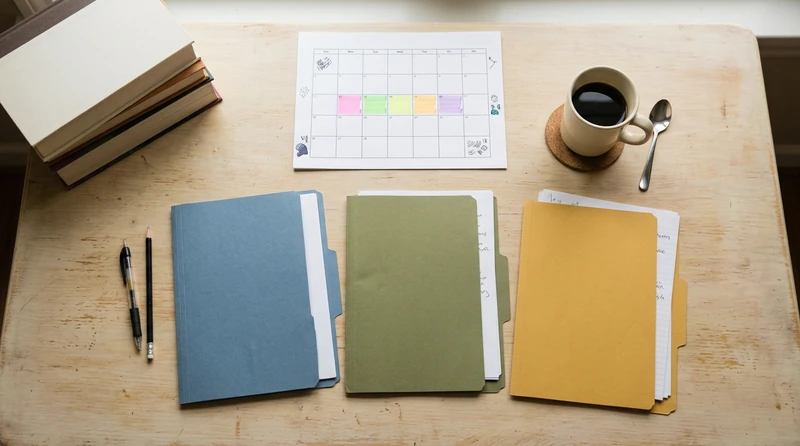
Slot each one into a lane: "do this first," "do this second," and "third — or ask for more time." The third lane is not failure; it is strategy. Trying to give equal effort to all three usually means all three come out mediocre. Deliberate sequencing protects your grade on what matters most.
Build a Minimum Viable Plan for Each Piece
A minimum viable plan (MVP) is the shortest path from zero to a submitted assignment that meets the core requirements — not your ideal version, but the version you can actually complete in the time available.
Define What "Done Enough" Looks Like
For an essay: a defensible thesis, three supporting points, and a conclusion. For a problem set: every question attempted, with priority given to the highest-point items. For a presentation: a clear structure, readable slides, and enough practice to speak without reading off the screen.
Time-Box Each Deliverable
Assign a hard time ceiling before you start — say, eighteen hours for deliverable one, twelve for two, and six for three. When the clock runs out, you move on. Done is better than perfect when three deadlines are competing for the same week.
Schedule Backward From Each Due Date
Backward planning is the most underused tool in deadline management. Instead of asking "when should I start?" ask "when does this need to be done, and what needs to happen in what order to get there?"
Work in Reverse From Submission Time
If deliverable one is due Wednesday at midnight, the final draft needs to exist by 10 PM for proofreading. The first complete draft needs to be ready by Monday night. An outline needs to exist by Sunday. Now you have concrete checkpoints, not a vague sense that you should "work on it."
Build a Minimum Six-Hour Buffer
Technology fails. Rereads take longer than expected. A six-hour gap between your personal finish line and the actual deadline catches the errors that would otherwise cost you points. If you finish early, that time flows into deliverable two.
Protect Your Sleep
All-nighters feel productive. Research is consistent that they are not. After 20 hours without sleep, cognitive performance drops to a level equivalent to legal impairment. Writing gets worse, problem-solving slows, and errors multiply — errors that cost time to fix the next day.
Set a hard cutoff — 1 AM at the absolute latest — and honor it. Even six hours of sleep leaves you sharper than continuing to push through exhaustion. The night before your most important submission is the one to protect most aggressively; a rested final read-through catches more than two hours of exhausted revision.
Ask for an Extension the Right Way
If triage reveals that one deliverable genuinely cannot be done to an acceptable standard, asking for an extension is the right call. Done correctly, most professors will say yes.
Contact the professor at least 48 hours before the deadline — ideally three to five days out. Be specific: name the assignment, propose a concrete alternative due date, and keep the explanation to one or two sentences. If the syllabus has a strict no-extension policy, acknowledge it and ask whether any flexibility is possible. Professors who receive a respectful, early, specific request respond very differently from those who get a panicked email at 11:59 PM.
Getting Help With the Bigger Picture
A deadline pileup is often a symptom of a broader planning gap — work that accumulated because due dates felt distant. If you find yourself in similar crunches repeatedly, the guide on time management for students walks through how to structure your week so that clusters become visible before they become crises.
If anxiety is making it hard to sit down and work at all, the article on stopping procrastination covers the specific patterns that keep students stuck even when the stakes are high.
Conclusion
Surviving a week with three big deadlines is not about doing everything perfectly — it is about doing the right things in the right order with enough sleep to think clearly. Triage your deliverables by grade weight and urgency, build a minimum viable plan for each, schedule backward from due dates, and ask for an extension before the deadline if you genuinely need one. The students who navigate a deadline pileup best are not the ones who work the most hours; they are the ones who protect the quality of their highest-priority work and stay functional enough to finish the week.
Frequently Asked Questions
What should you do first when three deadlines land in the same week?
Spend thirty minutes triaging all three deliverables before opening any of them. Score each by grade weight, due-date proximity, and remaining work required. This determines the sequence — which to finish first, which to do second, and which might need an extension request.
Is it acceptable to ask a professor for a deadline extension?
Yes — more so than most students assume — provided you ask early and specifically. Contacting a professor three to five days before the deadline with a concrete alternative date signals responsibility. Last-minute or vague requests are far less likely to succeed.
How do you avoid all-nighters during a deadline pileup?
Build a backward schedule from each due date with a six-hour personal buffer before the actual deadline. This distributes the work across days rather than compressing it into the final night. A hard nightly cutoff keeps your output quality higher than exhausted late-night grinding.
What is a minimum viable plan for a big assignment?
It is the shortest path to a submitted piece that meets the core requirements. For a deadline pileup, that means identifying the non-negotiables — a thesis and three points for an essay, highest-point problems for a problem set — and time-boxing the work rather than expanding scope until the clock runs out.
How do you recover after an exhausting deadline week?
Take at least one full day with no academic work, prioritize sleep, and eat properly. Then do a short retrospective: identify what caused the cluster and adjust your weekly planning so upcoming deadlines appear on your radar earlier. Treating recovery as optional leads directly to the next crunch feeling just as unmanageable.
Share this article



Comments 0
No comments yet — be the first.
Leave a comment
Your email will not be published. All fields are required.