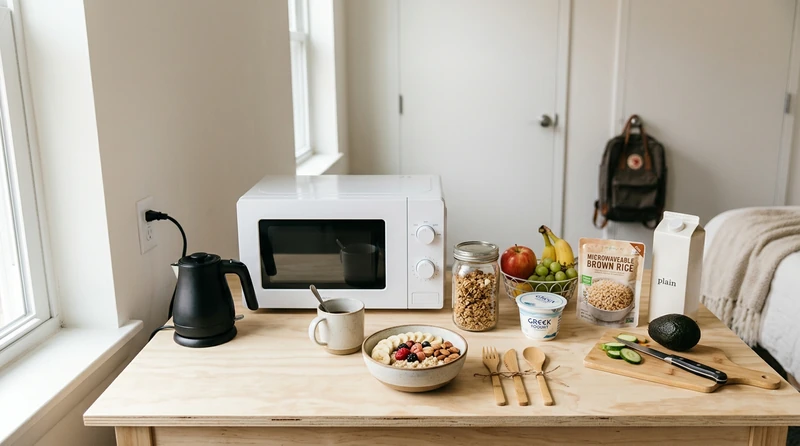
Living in a dorm with no kitchen makes it genuinely hard to eat well — instant noodles and vending-machine runs become the path of least resistance fast. Poor nutrition compounds everything else that's difficult about the first year: broken sleep, low energy during lectures, and the slow drift toward surviving on caffeine and granola bars. This guide covers how to eat well in a dorm using only a microwave, mini-fridge, and kettle, with realistic strategies for balancing dining-hall meals, keeping costs down, and fuelling steady study energy throughout the day.
Why Dorm Eating Goes Wrong So Quickly
Most students arrive at college knowing they should eat well, but the actual conditions work against them. There is no stovetop, prep space is a desk corner, grocery trips require planning, and the dining hall closes at unpredictable hours. When study pressure spikes, food becomes an afterthought. The downstream effect is real: erratic eating destabilises blood sugar, which kills concentration, which makes studying harder and stress worse. Getting your dorm food system right is not a lifestyle upgrade — it is a direct academic intervention.
Three Appliances That Cover Most of What You Need
You do not need a full kitchen. A microwave, a mini-fridge, and a kettle get you further than most students realise — the key is using each one deliberately.
Microwave as your main cooking tool
A microwave does far more than reheat pizza. It scrambles eggs (two eggs in a mug, whisked, 90 seconds with one stir midway), bakes a potato in six minutes, steams frozen vegetables, and heats canned soup or beans. These are not gourmet meals, but they are hot, filling, and nutritious. A microwave-safe bowl and a fork are the only extras you need.
Mini-fridge stocked with intention
A mini-fridge that is stocked deliberately works very differently from one that fills up with leftover takeaway boxes. Keep: eggs, Greek yogurt, string cheese, hummus, pre-washed salad greens, baby carrots, and two or three pieces of fruit. Rotate stock weekly so nothing goes to waste.
Kettle for the quick wins
Boiling water opens up instant oats, cup soups, couscous, and instant mashed potato — all in under three minutes. A kettle is cheap, uses almost no space, and widens your options well beyond what a microwave alone can do.
Stock a Smart Pantry Shelf
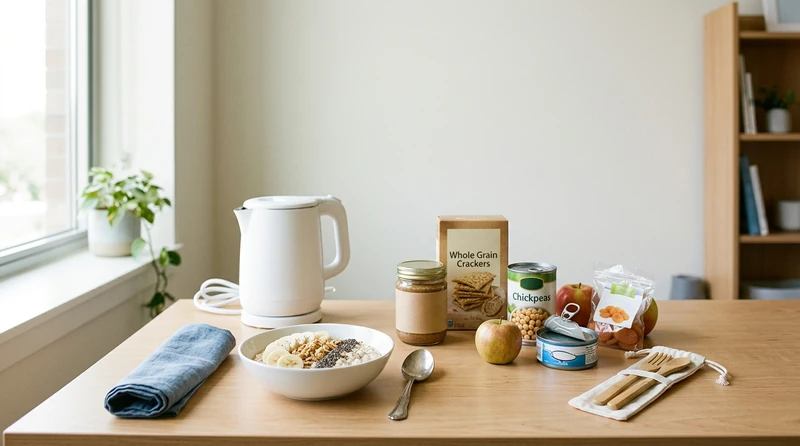
A reliable rotation of shelf-stable staples means you always have something to eat, even at midnight when the dining hall is closed.
For protein: canned tuna, canned chickpeas, nut butter, and protein powder. These keep for months and require zero prep. For carbohydrates: instant oats, pouches of pre-cooked rice (90 seconds in the microwave), wholegrain crackers, and low-sugar cereal — all slow-release, avoiding the spike-and-crash of refined snacks. Round it out with hot sauce, salsa, and mixed nuts. Fat slows digestion and keeps you full longer, which matters when your next meal is four hours away.
Working the Dining Hall Smarter
If your housing plan includes dining-hall access, that is your single biggest nutrition asset — use it strategically rather than treating it as a buffet free-for-all.
Build a complete plate
The goal at every dining-hall visit: half the plate vegetables and salad, a palm-sized portion of protein (grilled meat, beans, eggs, or tofu), and a fist-sized portion of a complex carbohydrate. It takes about fifteen seconds of thought before you start loading the tray, and the difference in how you feel two hours later is significant.
Take permitted extras back to your room
Most dining halls allow you to take a piece of fruit, a yogurt, or a small bag of nuts on your way out. A banana and a yogurt stored in the mini-fridge means tomorrow's breakfast is already handled without spending anything extra. Arriving with a light snack already in you also prevents the decision-making errors that come with showing up genuinely starving.
Eating for Steady Study Energy
The goal of dorm nutrition is not perfection — it is consistent fuel through a full study day.
Do not skip breakfast
Blood glucose is lowest in the morning, and skipping it typically backfires within two hours as concentration drops. A mug of instant oats takes four minutes; overnight oats (oats and yogurt stirred into a jar the night before) take zero morning effort. Either option stabilises energy before a first lecture better than coffee alone.
Eat every four to five hours and bridge the gaps
Meals spaced more than five hours apart cause energy troughs that coffee does not fully correct. A mid-afternoon snack — a handful of nuts with crackers, or Greek yogurt with a banana — bridges the gap without making you too full to focus. For late-night studying, slow-release carbohydrate (oats, crackers with nut butter) works better than something sweet, which causes a blood-sugar crash about forty-five minutes later.
Staying on a Budget
Eating well in a dorm does not require spending more money — it requires spending it differently. Set a weekly grocery budget before you shop, not after. Students supplementing a dining plan typically need $30–40 a week extra. Without any dining plan, $50–70 covers a solid pantry built around eggs, oats, canned proteins, rice pouches, and produce in small quantities. Two or three pieces of fruit at a time beats a full bag that turns unusable by Thursday.
Additional Resources
Food and money are closely linked in student life. For a practical framework that covers all your college spending — including how to allocate between groceries, dining plans, and eating out — the guide on student budgeting walks through a system built for college income levels.
If energy and focus feel inconsistent even when you are eating reasonably, look at how your study sessions are structured. Building a 90-minute study block covers how to match your schedule to your natural energy patterns so you are studying when your brain can actually perform.
Conclusion
Learning how to eat well in a dorm is a skill that gets easier once you have a system. The essentials are a few appliances used with purpose, a pantry shelf stocked with proteins and slow-release carbs, a strategy for the dining hall, and a meal rhythm that keeps energy stable through the day. None of this requires a kitchen, a cooking background, or a large budget. Start with one change — stocking the mini-fridge properly, or committing to breakfast before your first class — and build from there.
Frequently Asked Questions
Can you actually eat well in a dorm with just a microwave?
Yes, with some planning. A microwave scrambles eggs, steams frozen vegetables, heats canned beans, and bakes a potato in minutes. Pairing those hot meals with no-cook staples like Greek yogurt, nut butter on crackers, and fruit covers most nutritional needs without any stovetop.
What are the best foods to keep in a dorm mini-fridge?
Eggs, Greek yogurt, hummus, pre-washed greens, baby carrots, and two or three pieces of fruit are the most practical choices. They cover breakfast, quick snacks, and sides for microwave meals without taking much space or spoiling fast.
How do you avoid eating mostly junk food in a dorm?
Make junk food the inconvenient option rather than relying on willpower. If your room has real food readily available — oats, nut butter, crackers, fruit, yogurt — you will default to those when hungry and short on time. Not keeping junk in the room is far more reliable than trying to resist it in the moment.
How much should a college student budget for dorm groceries per week?
Students supplementing a dining plan typically spend $30–40 a week on additional groceries. Without any dining plan, $50–70 covers a solid diet built around eggs, oats, canned proteins, rice pouches, and small amounts of produce. Costs rise when the pantry is built on convenience snacks rather than staples.
What foods give the best energy for studying without a crash?
Slow-release carbohydrates paired with protein and a small amount of fat are the most reliable study fuel. Overnight oats with nut butter, crackers with hummus, or Greek yogurt with a banana all digest slowly enough to sustain focus across a long session — unlike sugary snacks, which cause an energy crash about forty-five minutes later.
Share this article



Comments 0
No comments yet — be the first.
Leave a comment
Your email will not be published. All fields are required.