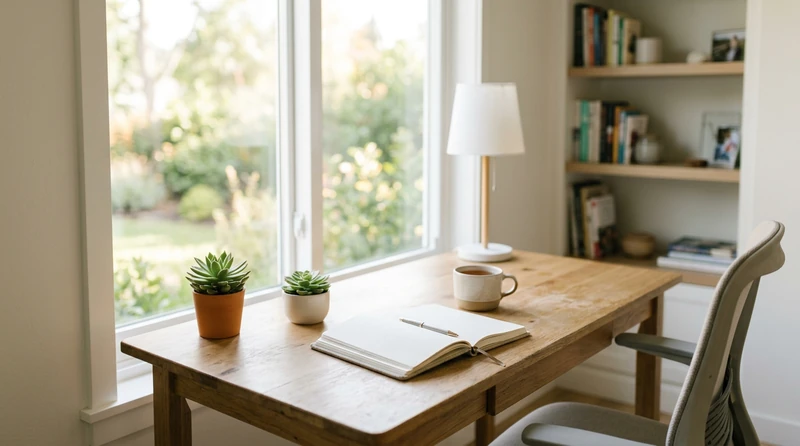
Most students sit down to study and then spend the first twenty minutes fighting their environment instead of their material. A noisy roommate, bad lighting, a phone within arm's reach, a desk buried under laundry — each one chips away at concentration before a single page is read. This guide covers how to design a study space that does the work for you, whether you have a dedicated room or just a corner of a shared dorm.
Why Your Study Environment Shapes Your Output
Environment is not background noise for studying — it is part of studying. Research on contextual learning shows that where and how you learn affects how easily you can retrieve information later. More practically, a space that is consistently used for focused work trains your brain to shift into concentration mode faster each time you sit down.
The problem is that most college students inherit their study environment rather than design it. They study at a cluttered desk in a shared room with overhead lighting and a phone face-up next to the laptop. Then they wonder why it takes forty-five minutes to get into a flow state — or whether they ever get there at all.
Lighting: The Detail Most Students Ignore
Lighting has a direct impact on alertness and eye fatigue. Dim, warm overhead lighting signals to your brain that it is time to wind down. Harsh, cool fluorescent light causes eye strain over long sessions. Neither is ideal for sustained focus.
Position Your Desk Near Natural Light When Possible
Natural daylight is the most effective study light available, and it costs nothing. Placing your desk perpendicular to a window — rather than directly facing it or with your back to it — gives you even, diffused light without glare on your screen.
Use a Dedicated Task Lamp for Evening Sessions
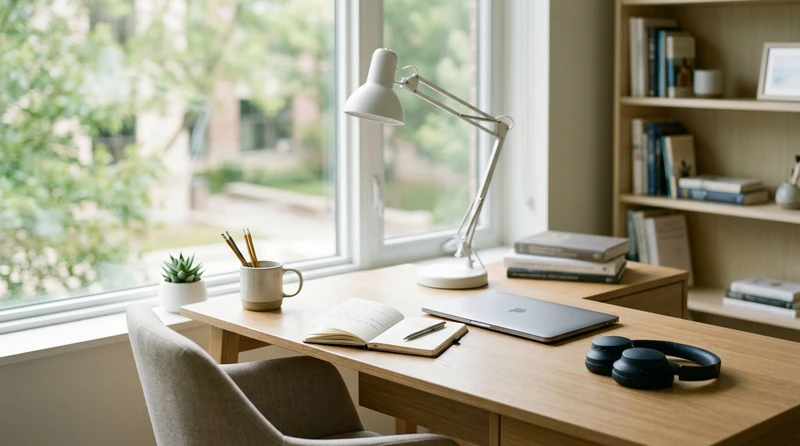
When natural light runs out, a desk lamp with adjustable color temperature is worth the investment. Aim for a cool-to-neutral white (around 4000K) during study sessions, which supports alertness without the harshness of pure blue-white light. Avoid relying solely on your monitor as a light source — it causes eye fatigue and skews your perception of ambient brightness.
Noise: Finding the Level That Works for You
The right noise environment varies by person and task, but the research on what does not work is fairly consistent: intelligible speech in the background — conversations, TV in the next room, group chatter — actively impairs reading comprehension and working memory. Random, unpredictable noise is especially disruptive.
Use Steady Background Sound to Mask Disruptive Noise
If you cannot control your environment (and in a dorm, you usually cannot), the strategy is to overlay the problem noise with something more predictable. White noise, brown noise, lo-fi instrumental music, or ambient recordings work for most people. The goal is a consistent sonic texture that your brain can tune out, rather than intermittent sounds that keep pulling attention.
Noise-Canceling Headphones as a Study Tool
A decent pair of noise-canceling headphones is one of the highest-return study purchases a college student can make. They do not need to be expensive to be effective. Even passive noise isolation — headphones without active cancellation — reduces the impact of conversation and foot traffic enough to matter.
Layout and Friction: The Underrated Variables
Once lighting and noise are handled, the next lever is physical layout — specifically, how much friction exists between you and deep work, and how much friction exists between you and distraction.
Keep Only What You Need on the Desk Surface
A cluttered desk is a visual distraction that competes for attention. Keep the desk surface limited to what you are actively using: your laptop or notebook, the course materials for this session, something to write with. Everything else goes elsewhere. The five seconds it takes to reach across the room for a textbook is not the problem — the visual clutter of having twelve things on the desk while trying to think is.
Increase the Distance to Distractions
The single most effective phone-management strategy is not willpower — it is distance. If your phone is on the desk, you will check it. If it is across the room, face-down, you check it significantly less. The same principle applies to snacks, game controllers, or anything else that competes for attention. Removing the object eliminates the decision entirely.
Create a Consistent Start Signal
One underrated element of a functional study space is ritual. Clearing the desk, putting on headphones, opening a specific playlist, making tea — any consistent sequence that precedes studying trains your brain to associate those actions with focused work. Over time, the ritual itself becomes a trigger for concentration.
Working Within Dorm and Shared-Space Constraints
A dorm room is designed for sleeping and socializing, not necessarily studying. If you share the space with a roommate, you have even less control. That is fine — constraints are workable, not fatal.
Designate a Study Zone Within the Room
Even in a small dorm room, you can mentally and physically separate your study zone from your relaxation zone. If your desk is where you study and your bed is where you rest, your brain will eventually learn that distinction. The most common mistake is studying in bed, which collapses that boundary and typically makes both studying and sleeping worse.
Set Ground Rules With Your Roommate
A five-minute conversation about study schedules can prevent weeks of passive frustration. It does not need to be formal: agreeing on quiet hours, giving heads-up before having guests over, or coordinating schedules so you can each have the room to yourselves periodically makes a meaningful difference. If your roommate is often present, noise-canceling headphones and a library schedule fill the gap — for more on navigating shared living arrangements, the Study Horizon guide on dealing with a roommate who is always around covers this dynamic in detail.
Having a Reliable Backup Location
No single study space works in every situation. Your roommate has friends over, the library closes early, the coffee shop is unexpectedly packed. Students who have thought through a backup location ahead of time lose far less time to disruption than those who improvise.
Your backup should meet the same core criteria as your primary space: adequate lighting, manageable noise, and access to power. Common options that are often overlooked: department lounges and study rooms within academic buildings, graduate reading rooms (often quieter than general library floors), and campus café seating during off-peak hours. Identify two or three that work for you before you need them.
Getting Help and Going Deeper
A well-designed study space removes friction from the start of a session, but it does not replace good study strategy once you are seated. If you find that even in a quiet, organized environment your focus still collapses after twenty or thirty minutes, the issue may be how you are structuring your time rather than where you are sitting. The Study Horizon guide on how to build a 90-minute study block covers a session structure that most students find significantly more sustainable than open-ended study sessions.
Conclusion
The study environment you work in is not a neutral backdrop — it actively shapes how quickly you focus, how long you stay there, and how much you retain. Getting the lighting right, managing noise proactively, clearing the desk surface, increasing friction to distractions, and identifying a backup location are all practical changes that take one afternoon to implement. Building a study space that actually helps you focus is one of the few productivity improvements that pays off every single time you sit down to study.
Frequently Asked Questions
Does it really matter where you study, or is discipline the main factor?
Both matter, but environment reduces the demand on discipline significantly. Willpower is a limited resource — a well-designed study space removes the need to constantly resist distractions, so more of your mental energy goes toward the actual work. Students who rely entirely on discipline in a chaotic environment are working harder than they need to.
What is the best lighting for a study space?
Natural daylight is ideal when available. For evening studying, a desk lamp with a color temperature around 4000K (cool-to-neutral white) supports alertness without causing the eye strain associated with very blue or very dim light. Avoid relying solely on overhead lighting or your monitor screen.
Can I build an effective study environment in a dorm room?
Yes, but it requires intention. Designate a specific area — ideally your desk, not your bed — as the study zone, use headphones to manage noise, communicate with your roommate about quiet hours, and keep the desk surface clear. The space does not need to be large or purpose-built; it needs to be consistent.
How do I stop checking my phone while studying?
Distance is more reliable than willpower. Place your phone in a drawer, in your bag, or across the room before you start a session. If you need it on for emergencies, flip it face-down and enable Do Not Disturb. Removing it from your visual field and arm's reach reduces checking behavior more effectively than any app.
What should I do when my usual study space is unavailable?
Have a backup location identified in advance. Academic building lounges, department study rooms, quieter library floors, and campus cafés during off-peak hours are all viable. The key is knowing where you will go before you need it — scrambling for a spot when your primary space falls through wastes time and increases stress.
Share this article


Comments 0
No comments yet — be the first.
Leave a comment
Your email will not be published. All fields are required.